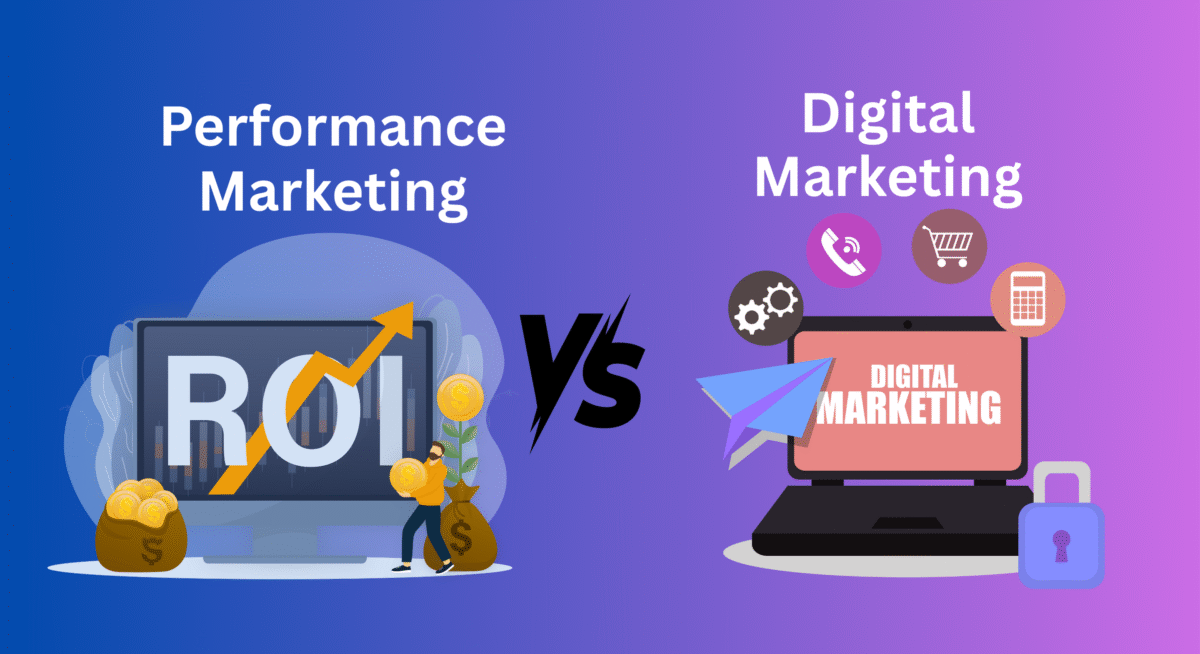
The marketing landscape has transformed beyond recognition in recent years, yet many businesses find themselves confused about which approach delivers the best results. Companies across industries struggle to choose between performance marketing tactics that promise immediate, measurable outcomes and broader digital marketing strategies that focus on long-term brand building and customer relationships.
Understanding the distinction between these two approaches isn’t just academic—it’s essential for making smart investment decisions that align with business goals and available resources. This comprehensive guide explores the fundamental differences between performance marketing and digital marketing, enabling readers to make informed decisions about their marketing strategy and resource allocation.
What is Digital Marketing?
Digital marketing represents a comprehensive approach that encompasses all online marketing efforts designed to connect businesses with their target audiences across various digital channels. This broad discipline encompasses multiple interconnected strategies that work together to achieve diverse business objectives.
The core components of digital marketing include search engine optimization (SEO), content marketing, social media marketing, email marketing, pay-per-click advertising, display advertising, influencer marketing, and video marketing. Each component serves different purposes within the overall strategy, from building brand awareness to nurturing customer relationships over time.
Digital marketing channels work synergistically to create a cohesive brand experience across multiple touchpoints. Companies using this approach typically focus on building brand awareness, customer engagement, relationship development, and sustainable long-term growth rather than immediate conversions alone.
The timeline and expectations for digital marketing often extend beyond immediate results. Success in this realm requires patience, as brand visibility online and customer trust develop gradually through consistent, valuable interactions across multiple platforms and content formats.
What is Performance Marketing?
Performance marketing represents a data-driven marketing approach where advertisers pay only when specific, measurable actions occur. This methodology focuses entirely on trackable outcomes and immediate results tracking, making it fundamentally different from traditional advertising models.
The core characteristics of performance marketing include measurable outcomes at every stage, a strict pay-for-performance model, real-time optimization capabilities, and an unwavering focus on return on investment. Marketers using this approach can adjust campaigns instantly based on performance data, ensuring optimal resource utilization.
Common performance marketing channels include affiliate marketing, Google Ads, Facebook Ads campaigns with conversion tracking, affiliate marketing partnerships, email marketing with detailed performance metrics, and influencer collaborations with specific, measurable outcomes. Each channel operates under the principle that payment occurs only when predetermined actions are completed.
Key performance indicators in this space center around conversions, cost per acquisition (CPA), return on ad spend (ROAS), click-through rate (CTR), and direct revenue attribution. These metrics provide immediate feedback on campaign effectiveness, enabling quick optimization and scaling decisions.
Key Differences Between Performance Marketing and Digital Marketing
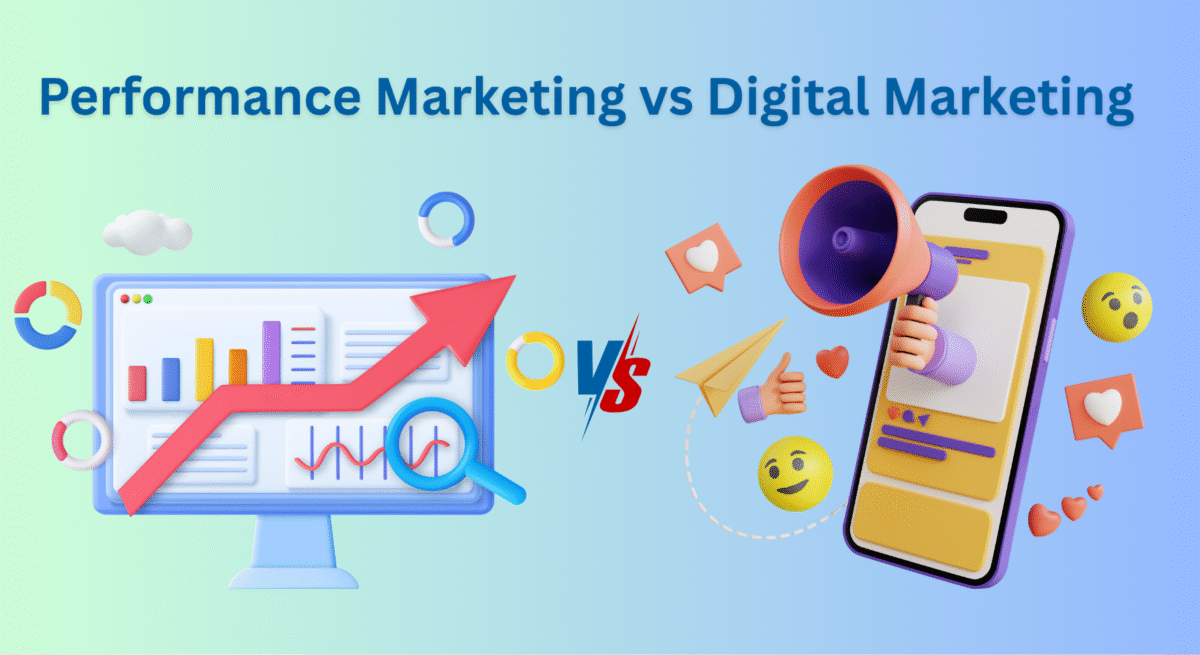
While both strategies aim to drive business growth, their approach to tracking, budgeting, and execution sets them apart. Performance marketing thrives on measurable, action-based outcomes, while digital marketing builds long-term brand value. The following differences highlight how each model shapes strategy and results.
Measurement and Attribution
The most significant difference lies in how success gets measured and attributed. Digital marketing focuses on brand metrics, engagement levels, reach expansion, and customer lifetime value development over extended periods. These metrics often require sophisticated attribution modeling to understand their true impact on business growth.
Performance marketing emphasizes direct response metrics and immediate, measurable results, ROI. Every dollar spent can be traced to specific outcomes, making conversion tracking attribution straightforward and budget justification simple for stakeholders.
Payment Models
Payment structures differ dramatically between these approaches. Digital marketing typically involves various models, including flat fees for services, monthly retainers for ongoing support, and hybrid approaches combining fixed costs with performance bonuses.
Performance marketing operates exclusively on pay-for-performance, commission-based, or cost-per-action models. Advertisers pay only when predetermined actions occur, whether that’s a sale, lead submission, or other valuable customer behavior.
Campaign Objectives
Digital marketing campaigns often pursue multiple objectives simultaneously, including brand awareness building, thought leadership establishment, customer education, and long-term relationship development. These goals support broader business objectives that extend beyond immediate sales.
Performance marketing focuses laser-sharp attention on specific user actions like lead generation, sales conversions, and other measurable outcomes. Campaign performance metrics directly tie to revenue generation and customer acquisition cost optimization.
Timeline and Results
Digital marketing operates as a long-term vs short-term strategy, with results developing gradually as brand recognition and customer relationships strengthen over months or years. This approach requires sustained investment and patience to see substantial returns.
Performance marketing delivers immediate results with quick optimization cycles. Marketers can see campaign effectiveness within hours or days, enabling rapid adjustments and scaling decisions based on real-time data.
Advantages and Disadvantages
Every marketing approach carries its strengths and limitations, and understanding both sides is crucial for informed decision making. The following advantages and disadvantages highlight how digital marketing and performance marketing differ in impact and execution.
Digital Marketing Advantages
Digital marketing excels at building sustainable, long-term brand equity that compounds over time. This approach creates comprehensive customer relationships that extend far beyond individual transactions, supporting customer retention and advocacy development.
Companies using comprehensive digital marketing can support multiple business objectives simultaneously while enhancing their overall market presence and competitive positioning. The integrated approach helps establish authority and trust within target markets.
Digital Marketing Disadvantages
Measuring immediate return on investment can be challenging with digital marketing approaches. The complex customer journey makes it difficult to attribute specific outcomes to individual campaigns or channels, creating budget justification challenges.
This approach typically requires larger upfront investments with uncertain short-term returns. Results may take months to materialize, testing the patience of stakeholders expecting quick wins.
Performance Marketing Advantages
Performance marketing delivers clear, measurable results that directly tie to business outcomes. This transparency makes marketing budget allocation decisions straightforward and cost-effectiveness comparison simple for business leaders.
The approach offers quick optimization opportunities and scaling potential when campaigns prove successful. Lower financial risk makes it attractive for businesses with limited resources or those testing new markets.
Performance Marketing Disadvantages
Focusing exclusively on immediate results may sacrifice important long-term brand-building opportunities. The transactional nature can limit relationship development with customers, potentially reducing customer lifetime value.
Companies may miss broader market opportunities by focusing too narrowly on immediate conversions. The approach can become overly transactional, potentially damaging brand perception if not balanced properly.
When to Choose Performance Marketing

Performance marketing works exceptionally well for businesses with limited budgets requiring immediate returns on investment. E-commerce companies, software-as-a-service providers, lead generation businesses, and direct-to-consumer brands often find this approach ideal for their needs.
Companies with clear conversion goals, such as sales, lead submissions, or app downloads, benefit significantly from performance-based advertising. The approach proves invaluable when testing new markets or products with minimal risk, allowing businesses to validate concepts before major investments.
Rapid scaling opportunities make performance marketing attractive for businesses ready to expand successful campaigns quickly. The predictable cost structure helps with financial planning and resource allocation decisions.
When to Choose Digital Marketing
Digital marketing becomes essential when building brand awareness in competitive markets where differentiation requires sustained effort. B2B services, luxury brands, professional services, and enterprise software companies typically benefit from comprehensive digital marketing approaches.
Companies with complex sales cycles requiring extensive customer nurturing find digital marketing invaluable for guiding prospects through extended decision-making processes. Establishing thought leadership and industry authority requires the sustained content creation and relationship building that digital marketing provides.
Businesses focusing on audience targeting strategies across multiple touchpoints need the comprehensive approach that digital marketing offers. This method proves essential when customer education and relationship development precede purchasing decisions.
Hybrid Approach: Combining Both Strategies
The most successful companies often integrate performance marketing within broader digital marketing strategies, creating synergy between immediate results and long-term brand building. This hybrid approach leverages the strengths of both methodologies while minimizing their weaknesses.
Strategic frameworks for combination involve using performance marketing for bottom-funnel activities like conversion optimization and immediate sales generation, while employing digital marketing for top and mid-funnel engagement that builds awareness and consideration.
Resource allocation becomes crucial in hybrid approaches, requiring careful balancing between immediate performance goals and long-term brand development investments. Companies must determine optimal splits based on business stage, competitive landscape, and available resources.
Measuring Success in Each Approach
Measuring success requires different approaches depending on the strategy in use. The following metrics showcase how digital marketing and performance marketing define, track, and evaluate their effectiveness.
Digital Marketing Metrics
Success in digital marketing gets measured through brand awareness and recall studies, website traffic growth, engagement metrics, social media follower development, and content consumption patterns. These marketing metrics help provide insight into brand health and customer relationship strength.
Customer lifetime value calculations become essential for understanding the long-term impact of digital marketing investments. These measurements require sophisticated analytics tools and longer observation periods to demonstrate true effectiveness.
Performance Marketing Metrics
Performance marketing success relies on direct measurements like cost per acquisition, return on ad spend, conversion rates, and click-through rates. These metrics provide immediate feedback on campaign effectiveness and enable rapid optimization decisions.
Revenue attribution becomes straightforward with performance marketing, as each dollar spent can be directly traced to specific outcomes. This transparency makes budget justification and expansion decisions much simpler for business leaders.
Future Trends and Considerations
Privacy regulations continue to reshape both performance and digital marketing approaches. Recent changes in tracking capabilities require marketers to adapt their attribution models and measurement strategies while maintaining effectiveness.
Artificial intelligence and automation play increasingly important roles in optimizing both strategies. Machine learning algorithms help improve audience targeting strategies, campaign performance optimization, and resource allocation across channels.
Cross-channel attribution improvements help bridge the gap between performance and brand marketing efforts, providing better insights into how different approaches contribute to overall business success.
Making the Right Choice for Your Business
Business leaders should evaluate their current stage, available resources, target audience characteristics, and competitive landscape when choosing between these approaches. Companies in early growth stages often benefit from performance marketing’s immediate feedback and lower risk profile.
Established businesses with strong cash flow and longer time horizons might prioritize comprehensive digital marketing strategies that build sustainable competitive advantages. The decision ultimately depends on balancing immediate needs with long-term objectives.
Getting started requires careful assessment of internal capabilities, available technology, and team expertise. Whether choosing performance marketing, digital marketing, or a hybrid approach, success depends on proper execution and consistent optimization.
Conclusion
The choice between performance marketing and digital marketing isn’t always binary. Many successful companies find that combining both approaches creates the most effective marketing strategy. The key lies in understanding how each methodology aligns with specific business objectives, available resources, and market conditions.
Smart marketers recognize that immediate results and long-term brand building can complement each other when properly coordinated. By understanding the strengths and limitations of each approach, businesses can make informed decisions that drive both short-term success and sustainable growth.
Companies should regularly assess the effectiveness of their marketing approach and remain flexible enough to adjust strategies as business needs evolve. The most successful organizations master both immediate performance optimization and long-term brand development, creating comprehensive competitive advantages in their markets.